

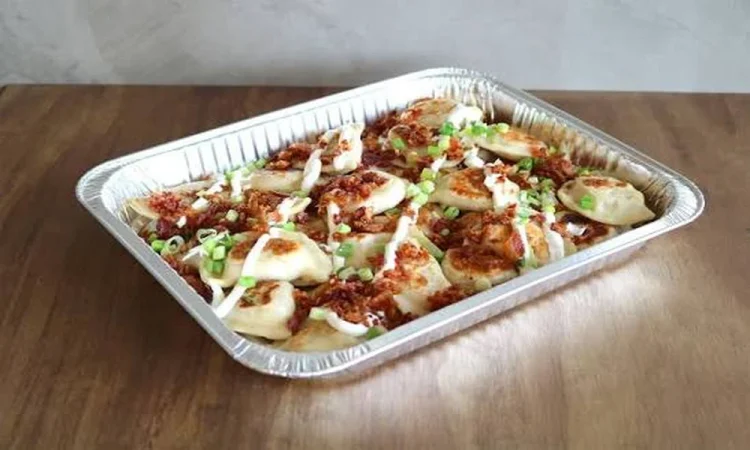
A mixed pierogi platter needs a clear arrangement that guests can understand without asking the host to identify every piece. Keep fillings in distinct areas, label them in plain food language and preserve that arrangement as people serve themselves. If the varieties cannot remain distinguishable on one platter, separate dishes may be the more useful choice.
The problem is easy to miss while assembling the food. You know which batch you cooked first and where you placed it. A guest approaching the table sees only a collection of dumplings, some of which may look similar. A useful serving layout carries your knowledge to that person without relying on your memory or constant announcements.
Choose an arrangement people can follow
Decide how many fillings genuinely need to share the platter. Two clearly separated choices may be easier to identify than a crowded selection. The number of varieties should come from what guests want and what you can serve clearly, not from a desire to fill every section of a large dish.
Arrange each variety in its own recognizable area with a visible gap or other clear separation where appropriate. Avoid alternating individual pieces for decorative effect. An alternating pattern may look orderly to the person creating it, but it becomes difficult to follow once the first few servings are removed.
Think about the guest’s viewpoint. A label placed behind a tall object or facing only the host is not doing much work. People should be able to connect the description to the food while standing where they will serve themselves. Test that connection before the platter reaches the table.
Choose serving tools that support the arrangement. If a single utensil encourages people to reach across several groups, separate utensils or dishes may be more practical. Where guests have dietary requirements, a platter map alone cannot establish suitability or prevent every form of contact. Discuss their needs before deciding that a mixed display is appropriate.
Leave space for serving rather than filling the platter to its edge. Food that shifts easily between areas can undermine the labels even when the original arrangement was clear. The goal is an understandable layout during use, not just a tidy photograph before anyone begins eating.
Write labels in food language
Lead with what is inside. A label reading “potato and onion” tells a guest more immediately than a product nickname alone. You can add the name afterward if you want people to recognize it later. The main filling description should remain the part that someone can read quickly while choosing food.
The descriptions in the Holy Perogy range for Brooklyn can help you translate product names into useful serving language. Sizzlin’ Fried Onion is a full-size potato-and-onion pierogi, while Oh! So Cheesy contains potato and cheddar. Those descriptions make two different choices legible without claiming that appearance alone will distinguish them.
Include a material distinction that a broad label might hide. Fully Loaded Potato contains smoked pork bacon, so “potato” would be an incomplete description for a guest avoiding pork. Cheeky Chicken Bites are chicken-and-onion mini dumplings, not breaded nuggets. Clear words prevent a playful name from becoming a guessing game.
Keep the original packages available for detailed ingredient questions. A short serving label is an introduction to the filling, not a complete allergen statement. Do not turn “plant-based” or “vegetarian” into an assurance that a food meets someone’s particular requirements. Let guests consult the current information and decide for themselves.
Use ordinary placement language only when it stays clear from the serving position. “Left” and “right” can reverse when people approach from different sides. If the platter will be accessible all around, put a label beside each group or use separate named dishes rather than relying on a single directional note.
For a platter served from one side, a simple note could read: Left group: potato and onion, Sizzlin’ Fried Onion. Right group: potato and cheddar, Oh! So Cheesy. Place the note facing the serving position and keep the two groups visibly separate.
Avoid moving the varieties after guests learn the layout
Once people have used the arrangement, keep it stable. Moving a variety to fill an attractive empty space can invalidate what a guest remembers from the first serving. A partly empty section is less of a problem than a full section containing a different filling under the old label.
Refill deliberately, using the same variety in the same place. If you need to introduce another filling, change the label and make the change clear before people serve themselves again. Better still, use another dish when that avoids ambiguity. The serving system should not require guests to detect an unannounced revision.
Prepare only the amount and variety you can manage appropriately. These frozen products are uncooked and need their package-directed preparation before serving. A mapped platter does not solve cooking or holding requirements, so plan those separately for the conditions of the gathering. Do not leave a large display out indefinitely simply to preserve its appearance.
If pieces become mixed and you can no longer identify them reliably, do not restore order by guessing. Tell guests what is uncertain and reconsider how to serve the remaining food, particularly where an ingredient matters to someone’s choice. A label is useful only when it accurately describes the food beside it.
The best platter map becomes almost invisible because it continues to make sense. Guests choose a filling, return for another serving and find the same information in the same place. Keep that promise from the first plate to the last, even if the display becomes less symmetrical as supper progresses.


